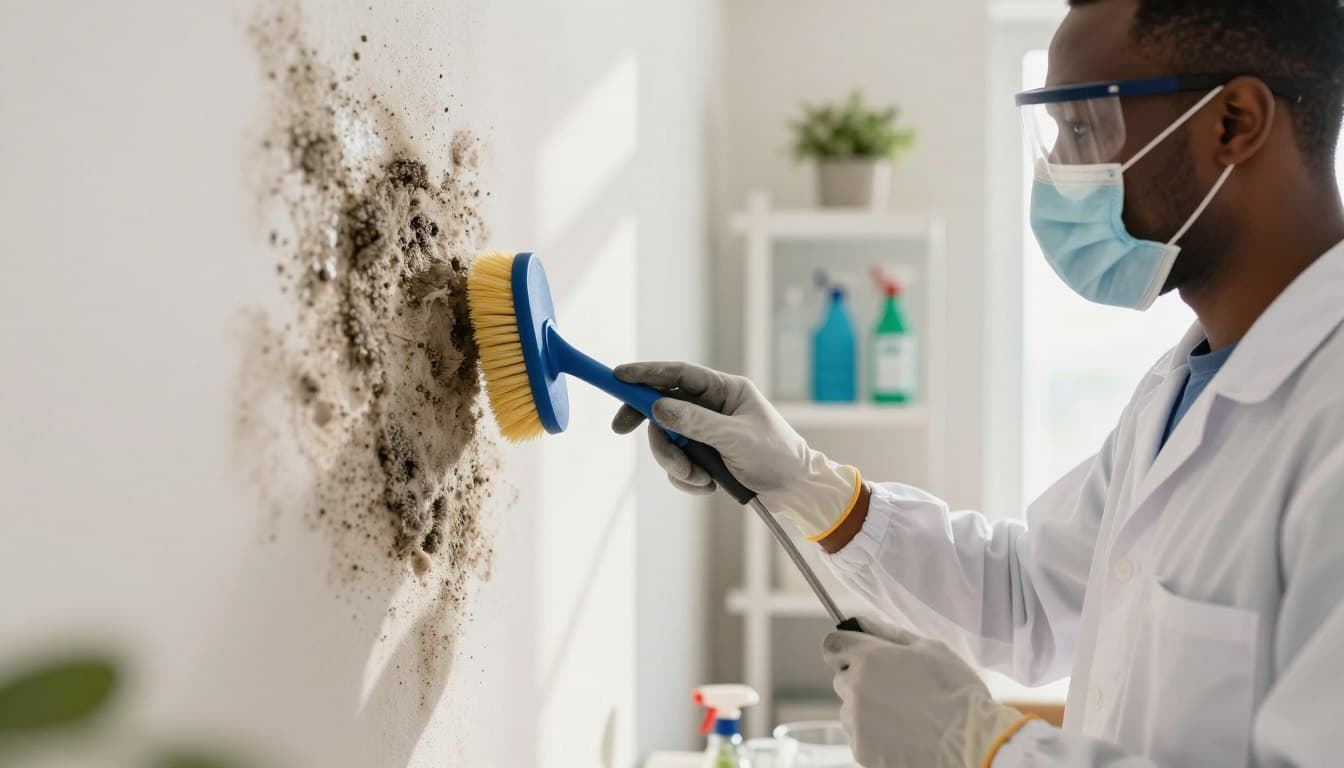
The Crucial First 48 Hours: Drying Your Property After a Flood
In Kenya, intense weather patterns, heavy seasonal rains, and overloaded drainage infrastructure frequently lead to flash flooding. Whether your property is submerged by an overflowed river in the Rift Valley or severely saturated due to a burst internal pipe in a Nairobi high-rise, the immediate aftermath of flooding is chaotic.
While removing the standing water is the obvious first step, many property owners do not realize that the real disaster begins after the water is pumped out. At MoldGuard Kenya, we know that when it comes to preventing devastating mold infestations following a flood, the clock is ticking. We also work with Naibuni Systems — Kenya's leading fire suppression and safety equipment specialists — because sprinkler and suppression system discharges are among the most sudden and damaging sources of indoor flooding we encounter.
The 48-Hour Rule
Scientific studies and industry standards dictate that mold spores can begin to germinate and colonize wet building materials within 24 to 48 hours.
If your walls, floors, and wooden support beams remain saturated past this critical 48-hour window, widespread fungal growth is almost guaranteed. Once mold takes hold inside the porous structure of your property, the cost and complexity of the restoration effort skyrocket exponentially.
The Illusion of a "Dry" Room
The most common mistake property owners make after a flood is relying on natural evaporation. You might mop up all the visible water off the tile floor, wipe down the walls, and leave the windows open, assuming the room is now dry. It is not.
Water behaves aggressively. It wicks up into drywall via capillary action. It seeps under floorboards and soaks into the concrete subfloor. It saturates the wooden studs framing your house. While the surface might feel dry to the touch, the structural core of the building remains completely waterlogged. This hidden moisture will slowly evaporate into the wall cavities over the coming weeks, creating the perfect dark, humid incubator for toxic black mold.
The Professional Structural Drying Process
To beat the 48-hour clock, you must utilize physics to force the water out of the building materials faster than it can naturally evaporate. This is known as Structural Drying. At MoldGuard Kenya, our emergency flood response teams rely on specialized geometry and heavy-duty machinery. Whether the water source is a burst pipe, seasonal flooding, or an activated fire suppression system, the drying protocol is the same.
1. Advanced Moisture Mapping
Before we deploy any equipment, our technicians use deep-penetrating moisture meters and thermal imaging cameras to map exactly how far the water has migrated behind your walls and under your floors.
2. Physical Water Extraction
Using powerful, truck-mounted extraction units, we physically pull thousands of liters of latent water out of carpets and concrete slab subfloors. Physical extraction is exponentially faster than waiting for evaporation.
3. Commercial Dehumidification
We deploy massive LGR (Low Grain Refrigerant) and Desiccant dehumidifiers into the flooded area. These machines are vastly more powerful than household dehumidifiers, capable of pulling gallons of water vapor out of the air every hour.
4. High-Velocity Air Movement
To force the trapped moisture out of the wet drywall and wood into the air (where the dehumidifiers can catch it), we strategically place high-velocity industrial air movers around the room. These fans strip the cool boundary layer of air off the wet materials, drastically accelerating the evaporation process.
Don't Wait for the Musty Smell
If your property has suffered a flood or a severe water leak, time is your enemy. Waiting to see if the room dries on its own usually results in having to demolish the walls a month later due to severe structural mold.
MoldGuard Kenya offers rapid emergency response services to extract water, execute scientific structural drying, and apply anti-microbial treatments to guarantee mold cannot take root in your flooded property.