Air Scrubbing Services for Mold Spores & Dampness in Kenya
Capture airborne toxic mold spores, musty odors, and microscopic allergens before they compromise your health and property. MoldGuard Kenya provides high-volume multi-stage industrial HEPA air scrubbing across Nairobi, Mombasa, and Kenya.
If you've ever walked into a room and been hit by that unmistakable musty smell, or noticed dark patches creeping across your ceiling after the long rains, you already know that mold and dampness are more than a cosmetic nuisance in Kenya. From the humid coastal air in Mombasa to the perpetually damp basements of Nairobi's older estates, mold spores are a silent, year-round problem for homeowners, landlords, hospitals, schools, and commercial property managers.
At MoldGuard Kenya, we specialize in professional Air Scrubbing Services designed to capture and eliminate airborne mold spores, toxic organic compounds, and persistent musty smells before they compromise your respiratory health and building structure.
📋 Guide Index: Air Scrubbing in Kenya
1. Why Mold and Dampness Are a Growing Problem in Kenya
Kenya's varied climate creates near-perfect breeding conditions for mold in many parts of the country. Coastal towns like Mombasa, Malindi, and Kilifi experience high humidity almost year-round, while Nairobi and the central highlands see heavy seasonal rains during the long and short rain seasons. Add to this the tightly sealed, poorly ventilated construction common in many modern apartments and offices, and you have a recipe for trapped moisture, condensation, and rapid mold growth.
- Rapid urban construction with minimal attention to damp-proofing membranes and cross-ventilation.
- Increased reliance on air conditioning in sealed glass buildings, which traps indoor condensation.
- Aging plumbing and roofing in older estates (such as Kilimani, Lavington, and Parklands), leading to hidden wall leaks.
- Poor drainage around building foundations, especially in flood-prone neighborhoods.
- Extended rainy seasons that leave plaster walls and concrete ceilings damp for weeks at a time.
2. What Is Air Scrubbing, Exactly?
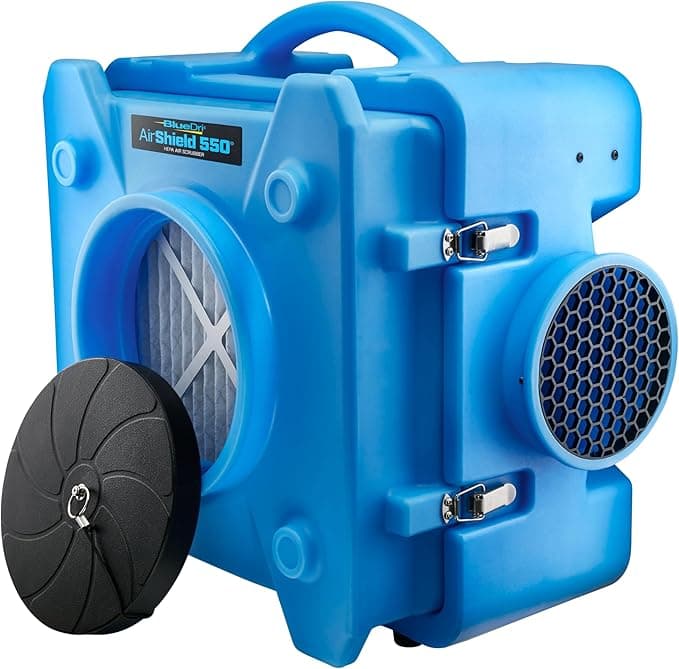
Air scrubbing is a professional air purification process that uses industrial-grade negative-air equipment to filter airborne contaminants — including mold spores, dust, bacteria, and volatile organic compounds (VOCs) — out of an indoor space. Unlike a small household desktop air purifier, an industrial air scrubber is engineered for continuous high-volume filtration (500+ CFM) in contaminated or water-damaged environments.
3. How Air Scrubbers Actually Work
A commercial air scrubber pulls contaminated indoor air through a multi-stage filtration system before exhausting pure air back into the room:
🧪 True HEPA Filtration
Captures 99.97% of airborne particles down to 0.3 microns, effectively locking away fungal spores (2 to 10 microns).
🖤 Activated Carbon
Absorbs gas-phase volatile organic compounds (VOCs) and eliminates the persistent musty "damp smell".
🌀 Negative Air Pressure
Vents air out of containment zones to ensure disturbed mold spores cannot migrate into uninfected living areas.
4. The Health Risks of Mold Spores & Damp Indoor Air
Microscopic mold spores float invisibly in the air, meaning occupants inhale them long before visible colony patches show up on walls. In Kenya, prolonged mold exposure is associated with:
5. Warning Signs Your Property Needs Air Scrubbing
- A persistent musty or earthy smell in bedrooms, basements, or closets.
- Visible dark discoloration on walls, ceilings, window frames, or tile grout.
- Peeling paint or bubbling wallpaper caused by trapped wall moisture.
- Heavy morning window condensation during rainy months.
- Unexplained respiratory irritation that subsides when you leave the building.
6. Air Scrubbing vs. Other Mold Treatment Methods
| Treatment Method | What It Does | Key Limitations |
|---|---|---|
| Bleach / Surface Spray | Kills surface mold on non-porous tile | Does not filter airborne spores or deep root hyphae |
| Chemical Fogging | Disperses chemical droplets in air | Chemical residue risks; cannot filter airborne dust/spores |
| Standalone Dehumidifier | Extracts moisture from ambient air | Slow; does not filter existing active floating spores |
| Industrial Air Scrubbing | Actively filters 99.97% of airborne spores & odors | Most effective when paired with fixing moisture source |
7. The MoldGuard Kenya 7-Step Remediation Process
Step 1: Inspection & Thermal Moisture Mapping
We trace hidden wall leaks and moisture reservoirs using thermal cameras and meters.
Step 2: Air Quality Assessment
We evaluate airborne spore concentration levels and ventilation flow.
Step 3: Containment & Negative Pressure Setup
Plastic sheeting isolates the treatment zone to stop spore drift.
Step 4: Air Scrubbing Deployment
High-volume HEPA units clean room air 6+ times per hour for 24-72 hours.
Step 5: Surface Remediation & Fungicidal Extraction
Colonies on masonry and plaster are treated with professional mold removers.
Step 6: Root Moisture Correction Plan
We provide recommendations on fixing leaks, drainage, or adding dehumidification.
Step 7: Post-Treatment Verification
Final air checks verify spore counts have returned to normal ambient levels.
Frequently Asked Questions About Air Scrubbing Services in Kenya
❓ How long does an air scrubbing treatment take?
Most residential rooms in Kenya require 24 to 72 hours of continuous air scrubbing, depending on contamination severity and room size. Larger commercial spaces or post-flood cases may take longer.
❓ Will air scrubbing get rid of the musty smell permanently?
Air scrubbing with activated carbon filtration significantly eliminates musty odors. However, if the underlying moisture source isn't corrected, the smell can return over time, which is why we pair air scrubbing with moisture source correction.
❓ Is air scrubbing safe for people with allergies or asthma?
Yes! Air scrubbing is specifically recommended for households with allergy or asthma sufferers, as it actively extracts airborne spores (0.3+ microns) and respiratory allergens from indoor air.
❓ Do I need to leave my home during treatment?
For most residential air scrubbing projects, occupants can safely remain in unaffected parts of the home. For major containment projects involving heavy chemical treatments, we will advise you in advance.
❓ Can air scrubbing prevent mold from coming back?
Air scrubbing extracts existing airborne contamination, but long-term prevention depends on fixing the root moisture problem — such as a pipe leak, inadequate ventilation, or foundation dampness.
❓ Do you serve areas outside Nairobi?
Yes. MoldGuard Kenya serves property owners across Kenya's primary centers including Nairobi, Mombasa, Kiambu, Nakuru, Eldoret, and coastal regions.
Get a Free Mold & Air Quality Assessment Today
Mold and dampness don't resolve themselves. Don't let airborne spores spread through your building. Speak with MoldGuard Kenya's certified environmental technicians.