Best Dehumidifier for Nairobi Homes & Damp Bedrooms (2026 Buying Guide)
If you live in Nairobi — whether in Kilimani, South C, Kileleshwa, Lavington, Runda, Kasarani, or along Thika Road — you know how fast humidity can wreak havoc on indoor spaces. During Kenya's long rains (March–May) and short rains (October–December), indoor relative humidity (RH) in Nairobi households frequently surges above 75% to 85%.
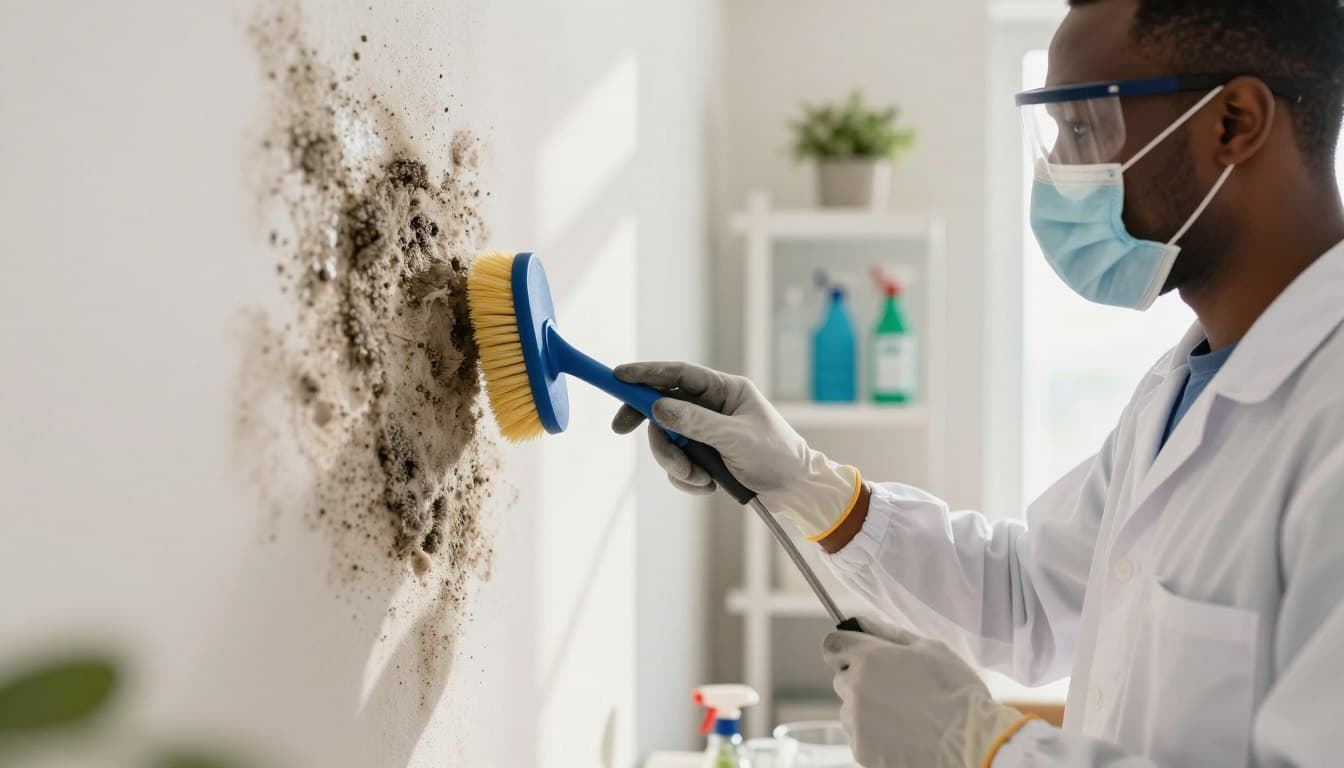
When humidity stays above 55% for more than 48 hours, mold spores (Stachybotrys chartarum, Aspergillus, and Penicillium) germinate rapidly on painted walls, ceiling boards, closet wardrobes, behind bed headboards, and underneath mattresses.
While opening windows can help during dry sunny afternoons, Nairobi’s rainy season air is saturated with moisture. The only scientifically proven way to lower indoor relative humidity and prevent mold growth permanently is by using a high-efficiency electric dehumidifier.
In this guide, our certified mold remediation specialists break down the best dehumidifiers available in Kenya, how to size a unit for your room, and how to stop dampness for good.
Why Nairobi Homes Suffer from High Indoor Humidity
Nairobi’s unique microclimates — ranging from the misty highland air of Limuru and Karen to the low-lying moisture traps of South C, Eastleigh, and Donholm — create chronic dampness in residential properties:
- Poor Ventilation in Modern Apartments: Many newly constructed apartment complexes in Nairobi feature compact room layouts with limited natural cross-ventilation, trapping bathroom steam and cooking moisture inside.
- Cold Exterior Concrete Walls: Concrete block walls absorb moisture from outdoor rains and transfer cold temperatures indoors, leading to heavy condensation on interior walls and window glass.
- Ground-Floor Dampness: Ground-floor apartments and basements frequently experience capillary damp rising through unsealed floor slabs.
- Rainy Season Laundry Drying: Hanging wet clothes indoors during heavy Nairobi rains dumps 3 to 5 litres of evaporated water directly into your bedroom or living room air daily.
Dehumidifier Sizing Guide for Kenyan Rooms
Selecting the correct dehumidifier capacity (measured in litres of water extracted per 24 hours) is critical for effective mold prevention:
| Room Type & Size | Typical Humidity Problem | Recommended Dehumidifier Capacity | Top Recommended Unit |
|---|---|---|---|
| Compact Bedroom / Wardrobe (Up to 15 m²) | Wardrobe mustiness, closet clothes damp | Mini Desiccant / 900ml Electric | Deerma CS50MW / 900ml Mini Dehumidifier |
| Standard Bedroom / Master Suite (15 – 30 m²) | Window condensation, wall mold corners, damp bedsheet feel | 20 Litres / Day | Gree 20L or MoldGuard 20L Compressor |
| Large Living Room / 2-3 Bedroom Apartment (30 – 55 m²) | Whole-house dampness, musty air, wall discoloration | 25 – 35 Litres / Day | Westpoint 25L / Westpoint 35L |
| Townhouse Ground Floor / Commercial / Hotel (60 m²+ ) | Severe flooding, basement moisture, commercial storage | 60 Litres / Day | Westpoint 60L Industrial Dehumidifier |
Top Recommended Dehumidifiers in Kenya for 2026
1. MoldGuard 20L Compressor Dehumidifier — Best Overall for Nairobi Apartments
- Capacity: 20 Litres / 24 Hours
- Coverage: Up to 50 m²
- Price: Ksh 79,000
- Key Features: Digital real-time humidity display, auto-target RH setting (40%–80%), continuous drain hose option, washable dust filter, built-in caster wheels.
- Why It Wins: Engineered specifically for high-moisture Kenyan environments. It rapidly lowers RH from 85% down to a safe 45% in less than 3 hours, removing up to 20 litres of water every single day.
2. Gree 20L/Day Dehumidifier — Outstanding Reliability & Value
- Capacity: 20 Litres / 24 Hours
- Coverage: Up to 45 m²
- Price: Ksh 51,400
- Key Features: Energy-efficient rotary compressor, auto shut-off float valve, whisper-quiet operation, robust build quality.
- Why It Wins: Gree is renowned worldwide for durable cooling and climate control engineering. It offers exceptional performance at a highly competitive price point for Nairobi homes.
3. Westpoint 25L & 35L Commercial Dehumidifiers — Best for Large Living Areas & Estates
- Capacity: 25L / 35L per day
- Coverage: 50 m² – 75 m²
- Price: Ksh 46,760 (25L) | Ksh 58,360 (35L)
- Key Features: Heavy-duty extraction motor, reinforced chassis, high-volume airflow, continuous drainage port.
- Why It Wins: Perfect for spacious living rooms, townhouses in Karen/Runda, or ground-floor units experiencing high humidity from garden soil seepage.
4. Westpoint 60L Industrial Dehumidifier — Best for Commercial Facilities & Flooded Property Recovery
- Capacity: 60 Litres / 24 Hours
- Price: Ksh 69,960
- Why It Wins: When dealing with severe post-flood water damage, hotel laundry rooms, or pharmaceutical warehouses in Industrial Area Nairobi, the Westpoint 60L delivers continuous industrial-grade moisture extraction.
How to Position & Run Your Dehumidifier for Maximum Mold Prevention
To get the best results from your dehumidifier in Kenya:
- Set Target Humidity to 45% – 50%: Mold cannot grow when relative humidity stays below 50%. Most quality compressor dehumidifiers allow you to set this target on their digital display.
- Keep Doors & Windows Closed: Running a dehumidifier with open windows in Nairobi during the rainy season is like running an air conditioner with open doors — humid outside air will continuously rush in.
- Place Centrally: Position the unit at least 30 cm away from walls for maximum airflow intake.
- Use Continuous Drainage for Long Absences: If traveling during holidays, connect the included PVC drainage hose directly to a floor drain or sink so the unit runs continuously without filling the water bucket.
Frequently Asked Questions
Will a dehumidifier kill existing mold on my walls?
A dehumidifier stops mold from growing and spreading by removing the moisture mold needs to survive. However, existing black mold stains on walls or tiles must first be treated and killed with a professional fungicidal spray like MoldKill Max. Once killed, running a dehumidifier keeps relative humidity below 50% so mold never returns.
How much electricity does a dehumidifier consume in Kenya?
A typical 20L compressor dehumidifier consumes between 280W and 350W — roughly equivalent to a small refrigerator. When set to Auto Mode, the compressor automatically shuts off once your target humidity is reached, conserving power.
Where can I buy genuine dehumidifiers in Nairobi?
You can order directly from MoldGuard Kenya's Online Shop with fast same-day delivery across Nairobi, Kiambu, and Machakos, and 24–48 hour delivery nationwide to Mombasa, Kisumu, Eldoret, Nakuru, and Diani. All units come with warranty protection and expert technical support from our certified remediation team.
Need expert guidance on selecting the right moisture control equipment for your property? Contact MoldGuard Kenya today or chat with our specialists on WhatsApp at 0710907628.