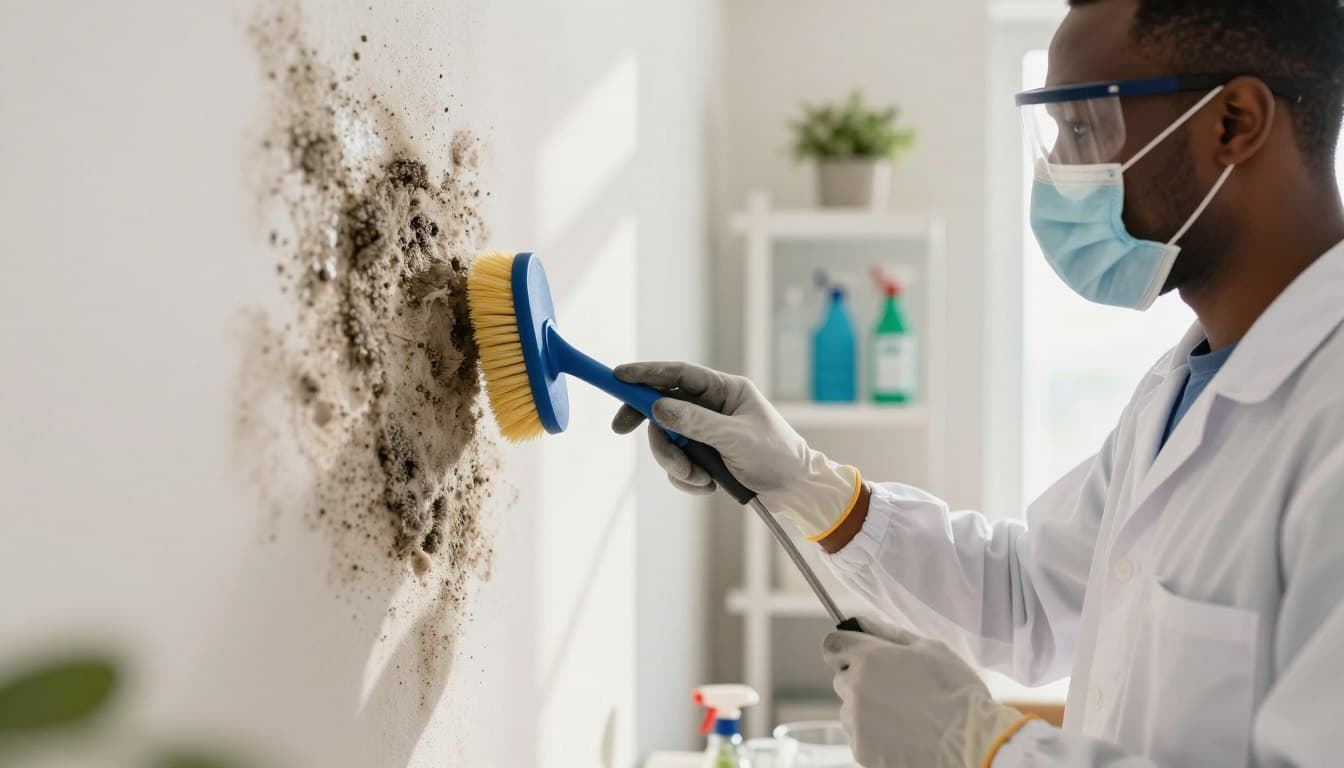
Stop Bleaching: How to Remove Mold Permanently
If you live in Kenya and deal with seasonal rains or coastal humidity, chances are you have encountered mold in your home. And if you are like most people, your first instinct was to reach for a bottle of bleach and a scrub brush. While this might make the wall look clean temporarily, a few weeks later, the exact same black spots reappear.
Why does the mold keep coming back? Because surface cleaning does not address the biology of mold. In this guide, the certified experts at MoldGuard Kenya explain why DIY methods fail and how professional remediation removes mold permanently.
The Great Bleach Myth
Let’s dismantle the biggest myth in household cleaning: bleach kills mold permanently. It does not.
Mold behaves much like a weed in a garden. The fuzzy black spots you see on your wall are just the "leaves" and "flowers" (spores). Beneath the surface of porous materials like drywall, plaster, and wood, the mold grows a complex root system known as mycelium.
When you apply bleach, its chemical structure prevents it from soaking into porous materials. The bleach stays on the surface, dissolving the colored top layer of the mold (making you think it’s gone), while supplying the roots underneath with pure water (since household bleach is roughly 90% water). Essentially, you are briefly hiding the mold while watering its roots.
The Professional 5-Step Method for Permanent Removal
Permanent mold removal requires a combination of structural drying, safe physical extraction, and chemical treatment. Here is how the certified professionals at MoldGuard Kenya guarantee permanent results.
Step 1: Moisture Source Identification
Mold cannot exist without water. Removing mold without fixing the water source is a guaranteed failure. Our first step involves using advanced thermal imaging and specialized moisture meters to find exactly how water is entering the material—be it a slow internal pipe leak, roof damage, or rising damp from the foundation. We diagnose the defect so it can be repaired.
Step 2: Atmospheric Containment
Before any cleaning begins, we must isolate the affected room. When disturbed, mold defensively launches millions of toxic spores into the air. If the room is not sealed off with thick polyethylene sheeting and negative air pressure machines, these spores will float through your house and start fresh colonies in your bedrooms and air conditioning ducts.
Step 3: HEPA Air Filtration
During the remediation process, we run industrial-grade commercial Air Scrubbers equipped with HEPA (High-Efficiency Particulate Air) filters. These machines cycle the air in the room dozens of times per hour, physically capturing 99.97% of airborne spores and mycotoxins, instantly improving indoor air quality.
Step 4: Physical Removal and Remediation
Instead of chemically burning the surface, we physically extract the mold.
- For Non-Porous Surfaces (Glass, Metal, Tiles): We use specialized anti-microbial solutions that completely destroy the spore structure.
- For Porous Surfaces (Drywall, Insulation, heavily rotted Wood): If the material is deeply compromised, it cannot be salvaged. We safely cut out and bag the infested materials and securely dispose of them, entirely removing the root network from your home.
Step 5: Structural Drying and Preventative Treatment
Once the mold is destroyed or removed, the structural frame of the house must be bone dry before any rebuilding occurs. We deploy commercial desiccant dehumidifiers and high-velocity air movers to extract all latent moisture from the studs and concrete. Finally, we apply a specialized anti-microbial encapsulant paint to the structural materials. This creates a barrier that prevents any rogue spores from ever taking root on that wood or concrete again. For commercial properties where mold follows discharge from a fire suppression system, we also coordinate with Naibuni Systems to source replacement fire safety equipment while we handle the remediation — minimizing total business downtime.
The Guarantee of Professionalism
Permanent mold eradication requires specific training, expensive equipment, and strict safety protocols. Attempting a massive cleanup yourself puts your respiratory health at severe risk and usually results in cross-contaminating your entire home.
If you are exhausted from fighting a losing battle against recurring mold, it is time to call in the professionals. At MoldGuard Kenya, we provide the science-backed, permanent solutions you deserve.